THE RUG HOUSE

Soft Geometries — Graphic & Modern Rugs

A tightly edited colour-and-form story for shoppers comparing geometric rug, modern rug, graphic rug, patterned area rug. The collection keeps the palette coherent while letting fibre, weave and shape vary, so the result feels like a design direction rather than a search-results page.

Start with the room’s existing hard finishes and upholstery, then decide whether the rug should blend into that palette or create the strongest contrast in the space. Compare dimensions and material on each product page before choosing.

SOFT GEOMETRIES
15 pieces

A colour story with commercial relevance

This Bespoke line naturally answers searches around geometric rug, modern rug, graphic rug, patterned area rug, but the content is written for people first: tone, contrast, fibre, proportion and room placement remain the decision framework.

How to use the palette

  • Compare the rug against floor colour in daylight and evening light.
  • Repeat one rug colour in a smaller textile or object rather than matching everything.
  • Use a larger rug for a calmer field of colour; use a smaller accent rug when you want the colour to read more strongly.
  • Check material, weave and exact colour on the individual product page.

Suitable wherever this colour family supports the room: living rooms, bedrooms, dining spaces, entries and passages.

Construction varies by piece. Use the individual product details for verified braid, weave, fibre and print technique.

Follow material-specific care and avoid assuming a single cleaning method across jute, cotton and blended constructions.

Search themes

geometric rug, modern rug, graphic rug, patterned area rug.

Frequently asked questions

How do I choose between a tonal rug and a contrast rug?

A tonal rug creates a quieter field; a contrast rug becomes a stronger focal point. Base the decision on how visually active the furniture and walls already are.

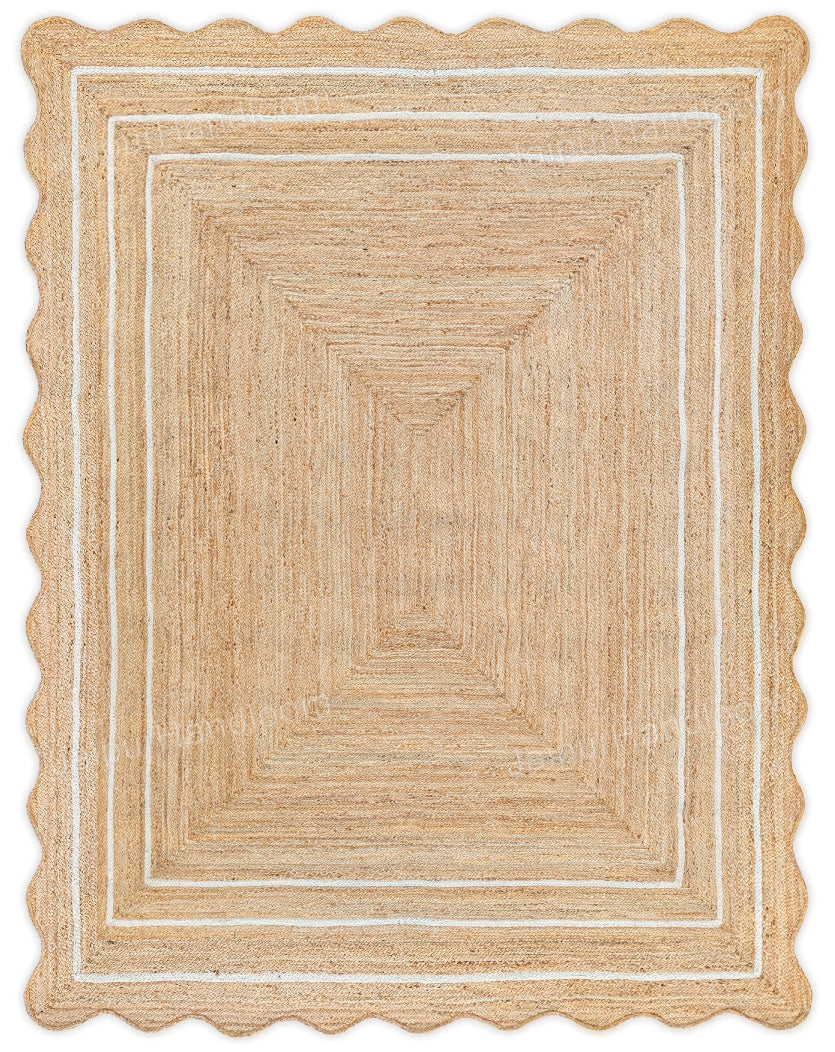
It belongs to SOFT GEOMETRIES because scallops, waves, rounds and softened silhouettes. The hand-braided structure reinforces that language through material rather than ornament.

The hand-braided construction keeps the character of jute / seagrass / sisal visible rather than smoothing it away. Subtle irregularity is part of the appeal, giving the surface depth rather than mechanical uniformity.

Use it where the floor needs a defined layer without overwhelming the furniture around it. The shaped edge acts as a quiet architectural detail against simple cabinetry, consoles or plain walls.

Pair it with natural timber, linen and quiet wall colour, allowing the rug’s texture and proportion to lead. Repeating one natural-fibre texture elsewhere in the room creates continuity without matching.